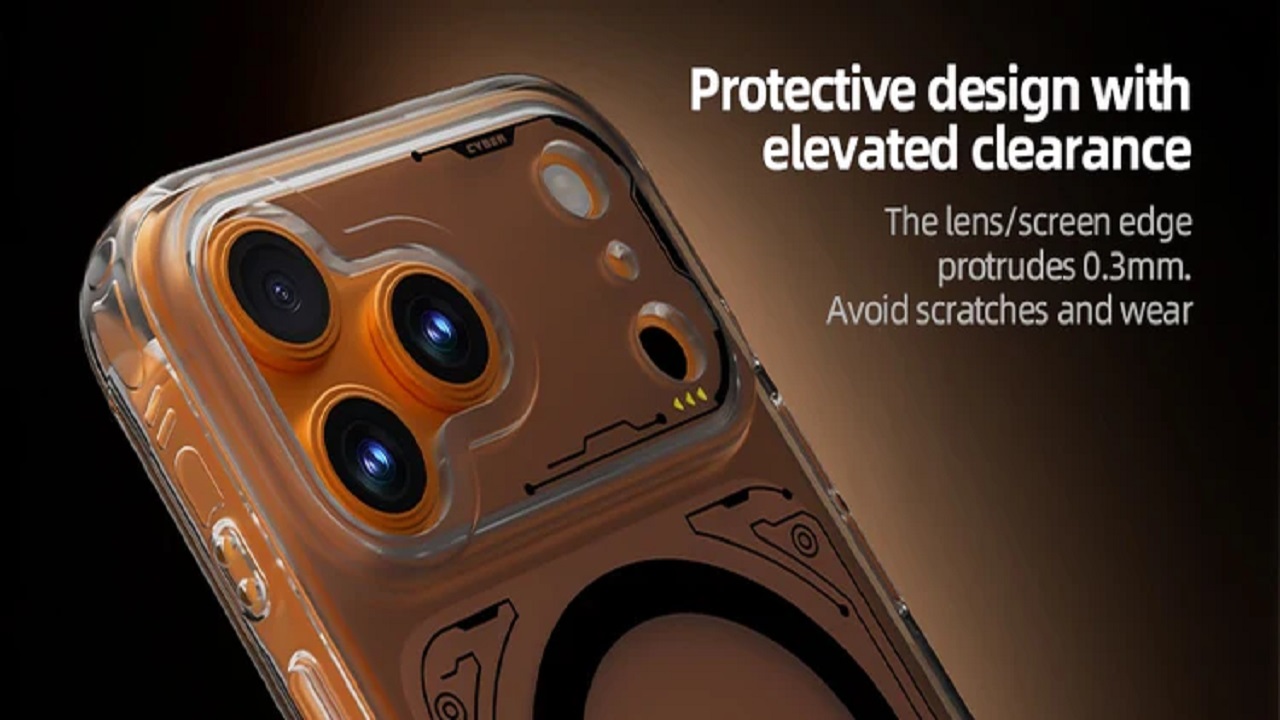
Smartphones have become close companions, always by a person’s side in the rain, on travel, at sports, and even in the depths of the water. Having access to such unpredictable conditions all the time, the role that a waterproof phone case plays in such situations has grown considerably. Most claim to be waterproof, and only a few of them offer full and reliable waterproof services. The knowledge of what makes a really waterproof case special is also used to help customers make the correct choice of protecting their devices.
Waterproof vs Water-Resistant
Before determining what constitutes a really waterproof case, it is desirable to know the difference between waterproof and water-resistant. A waterproof casing will help block the phone against any slight splashes, sweat, and exposure to moisture, yet it will not stop the water penetration in case of submersion. A waterproof case, on the other hand, is designed to prevent the phone from being damaged even when it is fully immersed in water at a certain depth and for a certain time. This is the significant gap that determines the level of performance that should be anticipated by customers.
The IP Rating Significance
An actual waterproof phone case should have an internationally accepted IP rating, and this is abbreviated as Ingress Protection. This rating comes in two forms of numbers. The first one is a dust and particle resistance level, and the second one is the water protection. An IP rating implies that the device can resist dust and that one meter of water can be submerged without damage for a period of thirty minutes. Depending on the requirements set by the company manufacturing the device, IP68 can be used with greater levels of protection and over a longer duration. There is no phone case that would be regarded as completely waterproof without tests and certifications for any of these ratings.
High-Tech Sealing and Construction
The sealing technology is the essence of a waterproof case. Waterproof cases have specially designed gaskets and seals that will seal all the weak areas of the phone effectively. These seals are normally composed of rubber or silicone and should be cut accurately in order to create a complete barrier. Water has the potential to enter the device and cause destruction if at least one spot is not completely sealed.
Most of the waterproof cases are modeled in a multilayer design. It is a frequently utilized construction of a hard polycarbonate to ensure durability, and a mixture of soft materials that form a tight and flexible seal. Multi-layer design improves the waterproofing, impact resistance, and thus, the case can be used in a rough environment. In other cases, snap-on locks are used, whereas in others, the covers are screwed together to ensure that every part is closed. This case does not loosen even when it is used in underwater or strong currents or accidentally moved.
Defense of All Ports and Openings
All phones have lots of points through which water can easily enter them, in case the case is not designed to be used underwater. An actual waterproof case should be able to cover all the ports, such as a charging input, speaker grills, microphones, SIM tray spaces, and side buttons. The numerous areas available as a convenience with standard cases are not available when complete protection is required against waterproof cases.
Underwater touchscreen and Camera
Another problem facing waterproof cases is keeping the touchscreen responsive. Water causes the touch sensitivity to be interfered with, and therefore, the case should have a specifically designed frontal layer to maintain the correct touch functionality. High-grade cases employ film of ultra-sensitivity, which is not only responsive but also provides a tight fit.
Compression Resistance and Strength
Water protection is not sufficient as the pressure of water rises significantly as one goes deeper. A phone case should also be waterproof, hence withstand pressure without giving in and letting the water in. Premium cases are tested with pressure chambers that imitate the actual underwater conditions in real life. This is to make sure that the case still has its structure and closing capability even when it is subjected to high pressure.
Conclusion
An adequately designed and well-engineered waterproof phone case is an achievement of superior design, excellent engineering, and tested quality assurance. Its operation lies in its total sealing, shielded ports, resistance to pressure, touchscreen, and certified IP ratings. Taking all these into consideration, users will have the assurance of carrying their phones everywhere they go, be it at the pool, the beach, or even on a rainy day, and not worry about getting their phones broken. An actual waterproof case makes a smartphone a reliable companion to every kind of place and adventure.